Hello everyone,
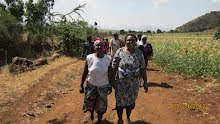
Week three was once again...great! Monday-Thursday we were all in our schools teaching, preparing students for the upcoming K.C.P.E. (Kenya Certificate of Primary Education)tests that will be written during April 3-5. Throughout the week our schedules needed some reconfiguring due to the students tests, however, like any other day we simply coped. Throughout the week and into the weekend we had terrific weather. Each day sunny and warm, so nothing to complain with regrds to that. Friday was a big day. Each of us had the opportunity to showcase where we had been teaching for the previous few weeks, and introduce one another to the rest of the staff and students. Trip began with Shannon and Emily taking us to Ithanji Primary. Very nice school with amazing staff and students. Paul, their head teacher, accompanied our tour before taking us on a walk around the school grounds, showing us the many projects that Farmers Helping Farmers has helped fund over the years. Next stop was Matuto, where Doug and Amy have been teaching for the past few weeks. Like Ithanji, very lovely staff and student body. Very nice school which seemed to be situated on the top of a mountain, absolutely beautiful views. Each of the classes, like at Ithanji, sang us a song or played a game with us. It was nice to see what amazing voice they all have and the level of participation is incredible. Seems everyone wants to sing and is always smiling. The final stop was Tambaya, where Ashley and I have been teaching. We arrived just shortley after 1 pm, where Stanley, the head teacher, and his staff had prepared a very nice lunch for us. I don't think any of us expected this, however I think it was well recieved. Afterwards, Stanley allowed Ashley and I to take the rest around to each of the classes and briefly introduce them to each of the teachers and their students. One of the major differences between Tambaya and the other two schools is the number of students in each of the classes. Tambaya is one of the larger schools in the area, so student introductions were replaced by a class song. After a brief visit to each of the classes it was time for for us to head home. Great way to meet the rest of the staff and students at each of the schools, and a great way to see just how amazing all of the kids here in the Mukurwe-ini district really are.on Saturday, the six of us went to Nyeri to visit the very lovely Green Hills Hotel. This involved some much needed relaxation along side the hotel pool, taking in as much sun as we could...sorry not trying to make you jealous...but it was beautiful! On Sunday, we attended a Church service next to the Ithanjo Primary school, which was very nice. Afterwards we had lunch at Paul's house(Matuto's head teacher). Beatrice, his wife, had prepared a very delicious lunch, while his daughter Hilda, who could barely contain herself with excitement, served us a very special dessert she had picked out from the grocery store the day before. Hilda is in Grade 2 and is very cute. After a visit with Paul and his family it was time for us to head home. I think we were all pretty tired after a long yet productive week 3. Hope all is well back home! Take care.
Monday, April 2, 2012

Saturday, March 24, 2012
Week Two
Week two has turned out to be just as wonderful as the first. We have enjoyed being in the schools with all of our pupils and the staff with whom we work. It has been quite interesting having long conversations over chai (tea) and what we would consider to be doughnuts. The weather has been beautiful, although we hope for the farmers and the land that rain comes soon. They say that everything will become very green and the land will look beautiful, of which we have no doubt.
Last Saturday, March 17 we were able to experience the second largest open air market in Africa. What an experience that was, there were many vendors selling anything from fruit and grains to baskets and wallpaper. The number of people who were excited to meet us was again astounding, and meet people we did. Ashley was handed a baby to hold while the rest of us stood taking pictures and speaking to the mother of the child about who we were, where we are from, etc. We purchased many delicious fruits and vegetables from ripe mangos to avocados. We are excited to go back again and explore it a little more.
During the week we have been coming home to share stories of our days at school and one evening we quickly realized one of the cows down the hill from our house was giving birth. We were able to watch and experience the birth of this new calf into the world. There were a few complications for which the veterinarian was called but in the end all was well. We have yet to figure out if it is male or female but it was a tremendous experience and we have since visited the calf which is quite healthy.
On Friday March 23rd, a few of us were able to attend the district sporting event competitions in Murkurwe-inin. We met many different and very important people in the area in terms of education which was quite exciting. We watched as students competed from various districts, the South, the North and what we believe to be the Central areas. Both girls and boys competed in handball, football, volleyball and netball. We were able to meet some of the students and we managed to squeeze in a few of our own games with them while they were not participating in other events. It was quite a beautiful field lined with numerous old trees which gave off a wonderful amount of shade from the sun. I am sure the next week to come will have just as many adventures if not more.
Last Saturday, March 17 we were able to experience the second largest open air market in Africa. What an experience that was, there were many vendors selling anything from fruit and grains to baskets and wallpaper. The number of people who were excited to meet us was again astounding, and meet people we did. Ashley was handed a baby to hold while the rest of us stood taking pictures and speaking to the mother of the child about who we were, where we are from, etc. We purchased many delicious fruits and vegetables from ripe mangos to avocados. We are excited to go back again and explore it a little more.
During the week we have been coming home to share stories of our days at school and one evening we quickly realized one of the cows down the hill from our house was giving birth. We were able to watch and experience the birth of this new calf into the world. There were a few complications for which the veterinarian was called but in the end all was well. We have yet to figure out if it is male or female but it was a tremendous experience and we have since visited the calf which is quite healthy.
On Friday March 23rd, a few of us were able to attend the district sporting event competitions in Murkurwe-inin. We met many different and very important people in the area in terms of education which was quite exciting. We watched as students competed from various districts, the South, the North and what we believe to be the Central areas. Both girls and boys competed in handball, football, volleyball and netball. We were able to meet some of the students and we managed to squeeze in a few of our own games with them while they were not participating in other events. It was quite a beautiful field lined with numerous old trees which gave off a wonderful amount of shade from the sun. I am sure the next week to come will have just as many adventures if not more.
Saturday, March 17, 2012
Week 1 - Kenya 2012
Our first week in Kenya has been a great experience. We arrived in Nairobi on Friday night. Henry and Shadd were there to meet us. All the flights went well, we only had one little problem… five of us ended up with no luggage! On Saturday we went to Rhodas farm and it was beautiful. We were all very excited because we got to see many different animals that you would not find on PEI! We got to see antelope, hartbeasts, different types of birds, zebras, and most importantly we got to see 6 giraffes! We were all very excited and the lunch that they provided for us was delicious.
When we arrived to our house on Sunday we went for a walk around Ichamara and we all felt as though we were on display. There were many friendly faces and smiles greeting us. That evening Gerald arranged for all the headmasters and drivers to come to the house for tea so we could meet them and discuss what was going to occur over the next five weeks. It was really nice to be able to meet everyone before the first day. Since our luggage still hadn’t arrived we decided that we would start school on Tuesday so we would show up with fresh clothes, and not the clothes we had been wearing since Thursday!
Tuesday was a very exciting day. We loved meeting the children and finally getting to our schools. Their smiling faces and kind behaviour made us all very excited for the following weeks. The staff at the schools have been extremely welcoming and already it is starting to feel like home. The first week has flown by and today we are heading to the market. We are enjoying Kenya so much and are so grateful for the kindness from all the people that we have met so far. Stay tuned for next weeks blog!
Here is a link for Rhoda’s farm: rimpaestates.com
When we arrived to our house on Sunday we went for a walk around Ichamara and we all felt as though we were on display. There were many friendly faces and smiles greeting us. That evening Gerald arranged for all the headmasters and drivers to come to the house for tea so we could meet them and discuss what was going to occur over the next five weeks. It was really nice to be able to meet everyone before the first day. Since our luggage still hadn’t arrived we decided that we would start school on Tuesday so we would show up with fresh clothes, and not the clothes we had been wearing since Thursday!
Tuesday was a very exciting day. We loved meeting the children and finally getting to our schools. Their smiling faces and kind behaviour made us all very excited for the following weeks. The staff at the schools have been extremely welcoming and already it is starting to feel like home. The first week has flown by and today we are heading to the market. We are enjoying Kenya so much and are so grateful for the kindness from all the people that we have met so far. Stay tuned for next weeks blog!
Here is a link for Rhoda’s farm: rimpaestates.com
Sunday, February 12, 2012
Dairy training and focus groups with farm women

Ken carried out two training sessions at dairies during the past two days and Teresa did focus groups with 10 farm women at each dairy to find out their perspective.
At the Lunuru Dairy there were over 100 dairy farmers in attendance. Almost ¾ were women. The farmers kept coming and coming!!
At the Ex Lawa dairy there were over 50 farmers and over half were women. They were especially interested in getting alfalfa seed to grow alfalfa to feed their dairy cows. In the highlands they can grow alfalfa!
Teresa Mellish
Visits to the screenhouses

While visiting Muchui Women we had the opportunity to visit some of the screenhouses and to take some time to talk with the women.
The weather situation in the area is the area has been highly variable. Last year was a devastation drought followed by a very wet period. The rains were damaging with even houses swept away. The rains stopped at the end of December which is about a month early. However, the Muchui women had good seed, planted in good time and in with good spacing. They will in the next month start to harvest. They expect to have an adequate crop. This is not the case for many farmers in Kenya.
The screenhouses we visited were planted and growing vegetables. Most have kale, spinach, onions and eggplant. Some of them have a variety of vegetables such as beet root and squash. The women are harvesting crops to feed their families and have surplus vegetables to sell. Because of the current dry weather the current price of vegetables has gone up. This provides a great opportunity for these women to sell surplus vegetables at a very good price.
Several of these visits stand out. We visited one older woman who did not have a very prosperous farm. There were several small houses in her compound where members of her extended family lived. Her screen house was producing about average. She told us “Her belly was full, her extended family was well fed and she had vegetables to sell”. This was in an area where vegetables were nonexistent where there was no drip irrigation. To me this is exactly what this project was designed to do. She had sold 2000 Shillings (about $25) worth of vegetables the week before.
It will be interesting to see what happens to insect populations in these houses. The birds are being kept out and are not eating the plants. However the birds are not eating insects from the plants under the screen. Also, there will be no large predatious insects.
We found that, in most cases, the screenhouses were well managed. The FHF horticulturist is essential to this project.
As they get familiar with growing crops in these screenhouses the structures should be insurance against drought and provide a good source of food and cash for the families.
Ken Mellish
Friday, February 10, 2012
Stories from Kenya from the vets
Wow! It is hard to believe that this wonderful journey is coming to an end. Our last week has been phenomenal. We started the week in Sweetwaters Park for a fun filled weekend of adventure. We were out on a few safari drives where we had the chance to see both white and black rhinos, giraffes, cheetahs, elephants, wart hogs, a ton a little gazelles, baboons, velvet monkeys and more. There was a watering whole by our tents, so we could watch animals drinking and playing at all times of the day.
Apart from this surreal African safari experience, this week was busy and we experienced a few touching and amazing moments that I would like to share with you:
Our local friend invited us to visit her family farm. I am usually animal oriented and was happy to see her cows, but I was mostly impressed by their biogas tank. This family has been trying to get electricity in their home for 20 years and it may not happen anytime soon. Last year they thought they would invest in a biogas tank. All the cow manure gets digested in this tank and generates methane for their cooking stove. Turns out they are now supplying methane gas to two houses on the property, are no longer using propane in their home, and use a lot less fire wood than before. They paid 120 00 ksh for the tank (a little less than $1500) and plan to have it paid within the next few years. The life expectancy of this tank is >25 years! That’s something to think about.
This story is to make you sit back and think that despite our cultural differences, we are all made the same. We met a very nice man that worked at a dairy that we collaborate with and he shared with us that his wife if battling cancer. He has to travel a few hours to get to the hospital every few weeks and the treatments are very expensive. He was organising a fundraiser next week, but we were going to be gone by then. Cancer touches all of us, even at the other end of the world. We were able to put some money together and contribute to the fundraiser.
Lastly, we have been teaching here for three weeks and every time we mention that cows can have twins, we get great laughs in the crowd. Twins are rare here! On our last day of clinics, a cow presented with difficulty calving. She had been in labor for over 12 hours and still no babies. The farmer said she had seen something come out of the cow’s vulva the night before, but still no baby! After assisting the cow for a little while, we were able to deliver one healthy heifer. Marissa mentioned that the calf was small, but we are in Kenya so we didn’t think much of it. It is a routine procedure to perform a thorough exam after obstetric manipulations to make sure that everything is healthy in there. John says: ‘there is another foot’. We didn’t believe him because twins are rare here, but there is was another heifer calf! What an amazing case for our last day.
Thank you for reading my stories
Melanie Mallet
Apart from this surreal African safari experience, this week was busy and we experienced a few touching and amazing moments that I would like to share with you:
Our local friend invited us to visit her family farm. I am usually animal oriented and was happy to see her cows, but I was mostly impressed by their biogas tank. This family has been trying to get electricity in their home for 20 years and it may not happen anytime soon. Last year they thought they would invest in a biogas tank. All the cow manure gets digested in this tank and generates methane for their cooking stove. Turns out they are now supplying methane gas to two houses on the property, are no longer using propane in their home, and use a lot less fire wood than before. They paid 120 00 ksh for the tank (a little less than $1500) and plan to have it paid within the next few years. The life expectancy of this tank is >25 years! That’s something to think about.
This story is to make you sit back and think that despite our cultural differences, we are all made the same. We met a very nice man that worked at a dairy that we collaborate with and he shared with us that his wife if battling cancer. He has to travel a few hours to get to the hospital every few weeks and the treatments are very expensive. He was organising a fundraiser next week, but we were going to be gone by then. Cancer touches all of us, even at the other end of the world. We were able to put some money together and contribute to the fundraiser.
Lastly, we have been teaching here for three weeks and every time we mention that cows can have twins, we get great laughs in the crowd. Twins are rare here! On our last day of clinics, a cow presented with difficulty calving. She had been in labor for over 12 hours and still no babies. The farmer said she had seen something come out of the cow’s vulva the night before, but still no baby! After assisting the cow for a little while, we were able to deliver one healthy heifer. Marissa mentioned that the calf was small, but we are in Kenya so we didn’t think much of it. It is a routine procedure to perform a thorough exam after obstetric manipulations to make sure that everything is healthy in there. John says: ‘there is another foot’. We didn’t believe him because twins are rare here, but there is was another heifer calf! What an amazing case for our last day.
Thank you for reading my stories
Melanie Mallet
Monday, February 6, 2012
Meru vet happenings
What a week it has been!!! Upon our arrival in Meru we met Jennifer lovingly called our Kenyan ‘Mom.’ Few to no people who have traveled to Kenya with FHF have not shared an ethnic meal and a great big laugh with her. Her home is a sort of haven for us ‘Muzungu’ or white travelers in this part of Kenya and was a pleasant way to start our second week in Kenya.
Our first activity was presenting a seminar on bovine zoonotic diseases to the dairy of Mukindu. We later learned that many people had been sick with some of the diseases we discussed and the seminar helped them realize how they may have contracted them and that some were preventable. The next day we held our walk-in clinic. We de-wormed over 200 cattle and treated another 50 with tick borne diseases and an assortment of other ailments. It was an exhausting day but we were pleased to have been able to help so many farmers in such a short time.
This week we continued our work with two dairy groups and we were joined by two Kenyan veterinary students from the University of Nairobi. After completing our seminars with them we were able to meet some of their members. Our most rewarding moment was when we were able to hear how the quality of life had improved with some farmers who had made some changes we had recommended in previous years. They were able to improve the health of their cows with small changes in management and thus increase their milk production and income. It was particularly impressive to the students, as the culmination of FHF’s efforts.
Lastly, I’d like to mention the manner in which dairy groups have expressed their gratitude for our time (which, they say is never long enough). Some of the dairy board members admitted that they were unable to thank us appropriately in English and instead wanted to show us their appreciation by giving us a few Kenyan goods to commemorate our experience with them. The gifts were in the form of caps and belts for the gents and for the ladies bracelets and ‘shukas’ or wraps ‘to be worn in the kitchen while doing the washing,’ as mentioned while being presented by an elder chairman of a dairy.
It has been a busy and exhausting week but we continue to be astounded by the beauty of this country and its people. This weekend we’re off to Sweetwater’s Ol Pejata Safari Park for a little R & R. Tune in next week for stories about our experience there and those of our last week in Kenya.
Thanks for reading; this is Marissa Steinberg, signing off.
Our first activity was presenting a seminar on bovine zoonotic diseases to the dairy of Mukindu. We later learned that many people had been sick with some of the diseases we discussed and the seminar helped them realize how they may have contracted them and that some were preventable. The next day we held our walk-in clinic. We de-wormed over 200 cattle and treated another 50 with tick borne diseases and an assortment of other ailments. It was an exhausting day but we were pleased to have been able to help so many farmers in such a short time.
This week we continued our work with two dairy groups and we were joined by two Kenyan veterinary students from the University of Nairobi. After completing our seminars with them we were able to meet some of their members. Our most rewarding moment was when we were able to hear how the quality of life had improved with some farmers who had made some changes we had recommended in previous years. They were able to improve the health of their cows with small changes in management and thus increase their milk production and income. It was particularly impressive to the students, as the culmination of FHF’s efforts.
Lastly, I’d like to mention the manner in which dairy groups have expressed their gratitude for our time (which, they say is never long enough). Some of the dairy board members admitted that they were unable to thank us appropriately in English and instead wanted to show us their appreciation by giving us a few Kenyan goods to commemorate our experience with them. The gifts were in the form of caps and belts for the gents and for the ladies bracelets and ‘shukas’ or wraps ‘to be worn in the kitchen while doing the washing,’ as mentioned while being presented by an elder chairman of a dairy.
It has been a busy and exhausting week but we continue to be astounded by the beauty of this country and its people. This weekend we’re off to Sweetwater’s Ol Pejata Safari Park for a little R & R. Tune in next week for stories about our experience there and those of our last week in Kenya.
Thanks for reading; this is Marissa Steinberg, signing off.
Subscribe to:
Posts (Atom)