Friday, September 28, 2012

New toilets for Kenyan schools

Keini-Kia-Ndege
Marinya-a-Rubi
Rujuu

Toilets!  Latrines! Bathrooms !  Whatever you call them, they are a necessary part of every school system.  Certainly, our students on PEI never give them much thought, other than to use when necessary or as an excuse to slip outside the classroom awhile.  Without exception, on PEI, school bathrooms are clean, safe and meet all your requirements; clean ceramic bowls or urinals, paper, soap and water or perhaps just a nice private place to linger with friends or hide out for a while. There is seldom, if ever, a wait to use one of many available bathroom stalls on each level of the school. The air is fresh, lots of water provides a thorough, clean flush after each use, light shines through the windows and from overhead lighting, there are sinks with running hot and cold water, and of course, mirrors to check your hair & make-up. All considered basic necessities for the average student on PEI.

Over the past year or two though, students at schools who are twinned with schools in Kenya have had reason to re-think their ideas about toilets.  Imagine their surprise when some twin schools listed new latrines as their top priority need.  It took a while for Island students to realize that if they were a student in Kenya, they could be sharing one or two wooden outdoor stalls with 500 or more students.  It would consist of a pit dug into the ground, a cement block poured to accommodate a safe place to stand while you completed your business and of course four wooden walls, a door and tin roof.  Cracks in the walls allowed for light, rain, wind and sometimes lack of privacy. In some cases, heavy rains eroded the clay around the pits to make them unsafe to use. As for line ups, Rujuu School reported that in 2011 they had a severe shortage of toilets and witnessed long line ups of girls during break time due to a ration of one toilet for every 36 girls!

So, what did Island students do about it?  Well, once the twin schools became aware of the needs, they got busy fundraising and in 2012, South Shore West United Sunday School sent $4869 to Marinya-a-Rubi Primary School,  Miscouche Consolidated School sent $1945. to Kieni-Kia-Ndege Primary School, Morell Consolidated sent $1000 to Tambaya Prinmary School, and Rujju School with the long lineups? They received $1492 from South Shore United Sunday School.   All of these funds were spent on building new toilets;  nice , new, clean, safe toilets.  The Kenyan schools are very proud of their new facilities and Farmers Helping Farmers is even prouder of the Island students who have responded to the needs of their friends. Who would ever think that toilets could make you so very proud! 

( Tambaya's toilet is still under construction, no picture available yet!)


2011 Village Feast Cookhouse under construction


Cookhouse under construction at Marinya-a-Ruibi Primary School
The 2011 Village Feast from Souris raised $13,000 for another cookhouse. 
The Village Feast  is a community based group based in Souris PEI  which raises funds for both Souris charities and an international charity.  Farmers Helping Farmers is delighted that they have chosen us as their charity.

These funds are being used to build another cookhouse in Kiirua, Kenya.  They are being used at the Marinya-a-Ruibi Primary School- a school with 250 students from kindergarten to standard 8 (comparable to PEI  grade 8).
The cookhouse should be completed in the next month or so- and we are looking forward to seeing students getting their lunch  in it  when we go to Kenya in January.

Marinya-a-Ruibi School is a new school in our twinning program.   It is twinned with  the Sunday School at Southwest United Church in Margate.  

During the past year a new kitchen garden was established and a school lunch program started.   The parents supply maize and beans for the school lunch.

Thursday, August 16, 2012


Tame


I find it hard
to look at you
to watch you
while you sleep
on my neck at night.

Knowing once I am gone
you'll become
another wild beast
a part of the feral
far from a housecat
far from a family member
you'll become once again
tempestuous
untouched
uncherished
you'll be once again,
alone.

Part of the landscape
part of everyday life
when to me
you are a goddess.

I find it hard
to imagine you
other than how you are
right now
or sitting alone
in the mud
as I found you
skinny and sniffling,
shaking with cold,
struggling to grow
so close to death.

For now
we will
allow you
to be tame.

Once you
are free again
in the jungle
in the night
running with the
wild things
that live outside
my door
I will see you
in a distant memory
sleek as a leopard
looking out
into the mist.


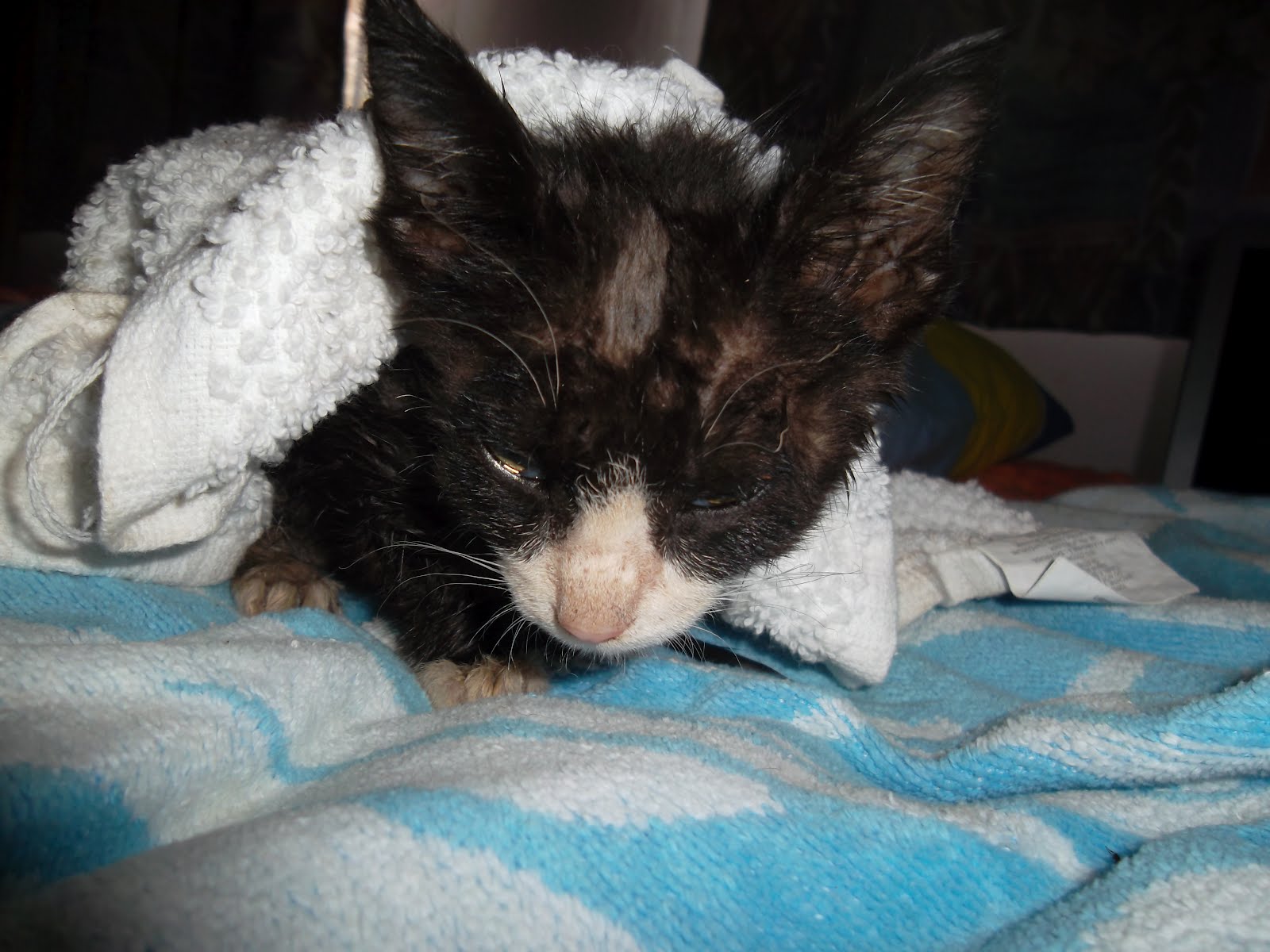
Author's Note*** I wrote this poem as a way to deal with some of the strays I took in while in Kenya. I say deal with not regarding the difficulties they presented to a training veterinarian (health wise, which were numerous and educational in themselves), but rather regarding the difficulties they presented to an animal lover. I took these cats in, in some cases kittens, because I wanted to treat them while keeping a watchful eye on them. When you first start actually administering some form of treatment to an animal you always want to keep them within arm's length, as you doubt your abilities and in many circumstances, the ability of the animal to survive the treatment. They all survived and even flourished under my care while in Kenya but to leave them behind ended up being a harder process than even I had imagined. I have done fostering work before with cats but this was a much different type of parting. You had to consider beyond just physically leaving the cats (the emotional grief experienced by both yourself and the animal) and think about the reality facing the animal you are leaving behind. They are not leaving your care to enter into the traditional North American household, which comes with a constant supply of cat food, toys with cat nip and one particular owner, they are being let loose into the Kenya wildlife to become part of the livestock. Not a beloved pet, not a cherished animal, rather they become a part of day to day life, whose comings and goings are unmonitored. I found peace in this but it was a process for me, abandoning my traditional views of animal care. This is not to say that animals, especially cats and dogs, were any less important to people in Kenya. Cats proved an excellent and very necessary form of rodent/pest control and dogs provided security but certainly the Kenyan adopted relationship with these animals we consider absolutely domestic is different. I wrote this poem with all of this in mind and it is my hope that it is taken as so. It is hard for us, as animal lovers, as veterinarians, as welfare advocates, to sit by and let these beloved friends loose into the world, yet it is our job. Just as I leave behind farmers whose future I am uncertain of, I leave behind these small creatures, just beginning their lives. It is a necessary hardness of this kind of position but it is one I think I can embrace with wider arms in the future as I continue to learn just how many forms of human-animal bonds exist on this planet.
As always,
Jen


From top:
"Small small"- a cat taken in from one of our farmers, taken right after a flea treatment.
"Mrs. Little" - a cat taken in from outside the chairman's house, where we roomed for the summer.
"All of us"- a group shot, one of many.

Wednesday, August 15, 2012


Bubbles


Look at the faces
of people first experiencing
the delight of bubbles.

At first they are
concerned
as to what will come
out of the little yellow plastic rod
but then
as the circular pieces
of water and soap begin
to breathe out of the wand,
they spark in these concerned faces
light, laughter
surprise, fascination.

Standing on the side of the road
giving out bubbles to children
who have never
in their life
even thought
about the existence
of a magically contrived
bubble
it is impossible not
to catch yourself
with a smile.


***Author's Note: Honestly, not a lot to say here. Some of my experiences in Kenya were easy to sum up in a few words, like this. It is easier than one thinks to place yourself in the position of someone who has never seen something like bubbles. Someone who has never even considered the fact that something like a bubble could be manufactured, let alone bottled in a small plastic container and sold at The Dollar Store. It seems hard at first but it just seamlessly happens as you observe other people marvelling at an object which is to us so common place. As you watch the emotions encompassing the faces of these children you can imagine yourself looking up and seeing for the first time, through the hot Kenya sun, bubbles. It is enjoyable every now and then to force yourself to remember how powerful these simple moments are, and in the right light, how they can be elevated by the human spirit and transformed into sources of sheer delight.
Thanks as always,
Jen


Garbage


Haunting, haunting
images of waste.

Of plastic bags
strewn out of car windows
speeding away
a part of me cringes
to watch a cookie wrapper
tousle in the dust
behind our vehicle.

At first
there is outrage
inside of me
one who has been raised
to refuse waste
to find a way
to make it no longer useless
to make it something else
less disgusting.

But here
we consume
we ingest
we take everything
out of everything
until it is gone
and but a hollow shell
remains,
to be buried
with the other
empty remnants
of something that
once served us
some purpose.

So is it waste
is it trash,
is this garbage
that is thrown out
our car window
or is it

totally used.


Author's Note*** This speaks to one of those oddities that occur to travellers of the developing world, we become entirely accustomed to things like a lack of proper garbage disposal. In Kenya, most people simply round up their trash and burn it once or twice a week, be it on the side of the road or in their front yard, it is just another chore of the week. The smell is intense but somehow over the matter of a month it becomes commonplace to your senses. The thick smoke with a strong scent of burning rubber becomes somehow bizarrely acceptable. One of the first days we were in Kenya, Morgan and I were shocked by our translator, Priscilla's, method of dealing with refuse. She was eating a milk biscuit (commonly used in Kenya as a sort of 'energy boosting' supplement and sold individually in little wrappers, really it's just a shortbread of sorts) and when she was finished with it, she simply rolled down the window and tossed it out. Out flew the wrapper on a hot updraft and I watched it roll behind us in the dust for a few seconds before it disappeared out of site. Walking around town became a good lesson in what people bought the most. Milk biscuit wrappers, chewing gum wrappers, mixed tea packets and engine oil bottles would form a sort of little circle expanding out from the entrance to tiny shops or convenience stores. The moment someone would buy something, they would seem to consume it immediately, no one ever seemed to buy anything in advance of the just now. I admit, I kind of enjoyed this. I was funny to me, as we always seem to be making lists of things we need when we go out to shop in North America, making sure we never run out of anything or have to go back throughout the week to complete our list. Witnessing this kind of thing gave me a view into another way of tackling such a simple part of our day to day lives and it made me wonder if we all implemented this kind of strategy, would we waste less? While I see garbage in Kenya everywhere I look, is it in someway less wasted and more used because it wasn't bought until directly needed, was immediately devoured and then left in the dirt. It wasn't bought, sat on a shelf, forgotten about and replaced, used up simply to get ride of it and then thrown out. It's abstract yes, but it does give you something to think about. We as North Americans are so quick to judge the massive amounts of garbage we are presented with when we are traveling through a developing country. It's hard not to be mildly outraged or appalled when you first see someone toss something out a car window, but over time, you can become capable of seeing something beyond the trash and this makes it easier to understand, it even leaves room for it to become, completely normal.
-Jen


Images:
Masai Boy in Garbage- taken outside the gate to Masai Mara, a world class Game Park in southern Kenya
Goat in Garbage- taken in a village outside of Nairobi (look to the middle right of the photo to see the solo sheep)
Dog in Garbage- taken in a rural Kenya village amongst a strip of local shops between two of our farm sites.

Friday, July 20, 2012


A Child walks behind me

too shy to say hello.

I slow my pace
I focus on her face
I smile and say "ney-et-ea"

No reply
but still she stalks behind me
quickening her stride with mine

staying at a distance
content to follow for now.

I let her go on
and don't pressure her with words

in the hot midday sun
we two animals

track one another
in different ways.

A child walks behind me
us both eyes forward

will stay at a distance
for now.


*Author's Note:For those of you avid followers of the blog, you'll know that since the start, I have marvelled at children's response to me upon arriving here in Kenya in early May. Honestly, I have never found myself writing so much about children. Their response is either shock (and subsequent run), wonder (but a bit of fear), terror, complete excitement or laughter. This was my experience in the first few visits to farms with children but then slowly, as my visits to the farms began to become frequent, I would catch these rare moments of what seem to me, a mixture of all these initial reactions. They would pose with me for a picture, maybe allow a hug, but for the most part, I would end up with photos were I'm looking at them and smiling and they are looking at me (for sure) but with a variety of reactions. Some were still frightened, some would finally smile, a lot would reach out to touch me but that was enough contact for them. I will admit that some of these feelings were reciprocal on my own part. Even at the end of the project (these last few weeks rather) I was still a bit hesitant to approach some of these children and ask their parents if a photo would be ok.

My confidence grew in this respect when Morgan and I attended the Bombas in Nairobi. A little girl in a beautiful headscarf sat directly across from me and many times throughout the various dance performances I would let my eyes drift to her and find her returning my gaze. Of course we'd both look away, I felt badly for staring and she probably was a bit fearful of me. Finally, during the intermission I got up the courage to go over and shake her hand. No smile, I was concerned, what do I do know? Luckily a man was sitting beside her (most likely a teacher, or as it turned out, guardian) and he began the conversation. He explained to me that she'd be admiring my hair from across the auditorium, I responded that I had actually been admiring her absolutely gorgeous headscarf. He told her this, finally, a smile, be it partial and discrete, more of a smile to herself really than directed towards me. He also explained to me that she was a Somali refugee, parentless, who had arrived in Kenya only six months previously and that she was suffering from tuberculosis. She was experiencing some difficulties acclimatizing to Kenya culturally, religiously and due to her sickness and trauma filled experience in Somalia. This moment of admiration for her, he told me, would be one she cherished. I asked if we could have a photo together. He looked like he was a bit anxious of how this would go. He paused and bit his lip a bit, uh oh, I had overstepped. He turned to her, leaned in and kind of whispered something to her. She turned to me, a true smile, right at me. She leaned forward in her chair and put her arms out to hug me. I smiled. I hadn't overstepped. The man asked if he could take the picture, I took his chair and the result was the photo seen at the top of the page. My favourite of the trip for sure. A moment which truly represented both the anxiety on my part and her's, the thing I had been fearful of from the start. Never had I wanted to feel like anyone was having their picture taken only for it to become a thing mzungus gawked at, or looked at and said "Oh look at these poor little children". For me, these photos were meant to capture something that I had experienced as well as the children in the photos, a first meeting, a second of understanding on both our parts, or a true leap of faith.

As a result of my experience with this beautiful girl, I managed the courage to finally ask some of my favourite farmer's for a photo with their children. I also managed to get a shot with our translator's (and friend, Priscilla) children when we visited their home for lunch. As I looked for photos to accompany this poem, suddenly all I could find was photos of children and I. Everywhere on my computer and Morgan's there was exactly the kind of photos this poem mean to express, so here they stand. Sometimes, we forget or overlook the courage it takes for both parties to embark on these type of encounters, which I hope to haves illustrated through this poem. Please enjoy the photos and take a moment to think about how foreign these seemingly normal photos can be.

Thanks as always,
Jen


Pictures from top:
*"Somali girl and I" at the Bombas, Nairobi.
* Farm 26, "The truly terrified" - this girl never got used to our presence regardless of the frequency, this last week I finally decided to give it a shot, Morgan took two photos and this was the result.
* " A group shot" - while visiting a local historical site outside of Nairobi (a place we later realized is primarily meant for Kenyans not outside tourists, although we enjoyed it greatly and were welcomed with great enthusiasm) we were tracked down through shouts of delight by a group of local high school girls. They desperately wanted a picture with these "pretty white girls" to put on Facebook, sure it would be "totally awesome" and get many "likes". We all shared a laugh over it, and how many shots we all took to get the perfect one. The picture above was with the girl who wanted to be the only black girl in the photo (her words not mine) so that her friends would be like "Oh sh**, look at this brownness between two whities" :) She also took a few shots to make sure her gansta lean was correct (hence me trying not to laugh).
* Farm 22 "A reach" this girl was not all together frightened of me, I'd say she fell more under the category of wonder mixed with a bit of fear. She was keen to touch me but not much beyond.
* "Priscilla's boys"
* "Utter excitement", we were often greeted by the school children outside of Farm 34, who always found some excuse to get out of class to come shake our hands. "How are you?" they'd shot with an instant response on their part of "I'm fine". This falls under the category of utter excitement for sure. They never got less excited over seeing us, even over the months of visits, and often followed us down to the farm, to marvel at what the heck we were doing. This resulted in many hilarious moments between us, culminating in a soap battle between myself and about ten 11-12 year old girls. They wanted to touch my skin, so I got them back by chasing them down and covering them with soap while scrubbing down before I left the farm. Later, Priscilla told me they found this funny, but one girl had been very upset that maybe the whiteness I had given her would be permanent (from the soap). Ha.
*"Michelle" the next few shots are of the cutest little girl imaginable, Michelle, at Farm 36. During our farm photo in nearly every picture she's staring at me, so finally I decided a closer encounter was fitting.


Tuesday, July 17, 2012


Graffiti


Storefronts are merely
witnesses of God
each one
more blessed than the next.


Sides of shambas
keep track, reminding
their absent builders
which pieces go where
who was there and when
how much a piece of wood cost
and why we were placed on this planet
in the first place.


Stalls of washrooms
house within them jewels
of education, teaching me
form four geometry
form two spelling
warning me
where smoking
is not allowed.


Small pieces
of communication, scattered
shreds of paper
in the napier grass,
in vacant football fields,
lining the road,
pressed by footprints
deep within the mud.


From a school child's homework


to a monument
for an honourable citizen


to the scratches of a man using the toilet
on a outhouse wall,

everyone

has a direct line to heaven
and chooses to access it
through the written word.

Ancient
new age
reformed
symbols
a shorthand version
of prayer.

Everywhere I look,
there is graffiti in Kenya.


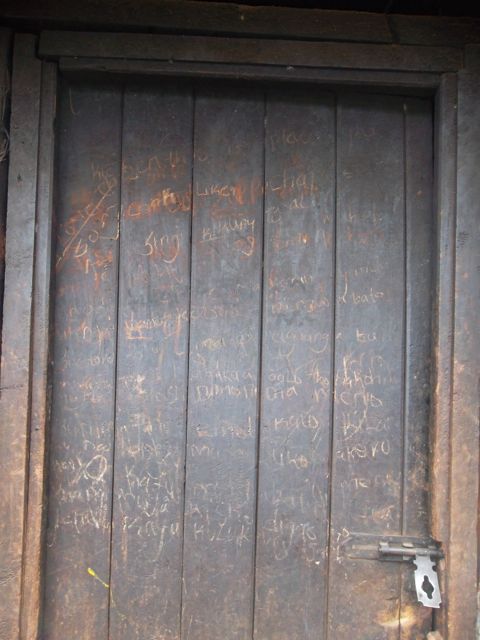
**Author's Note: This one doesn't really require a whole lot of explanation does it? These are photos I've compiled since arrival, although I will admit I had to run back to the outhouse to catch a snap of the piece of paper on the floor (every time I broke down and had to use the washroom on farms I would see anything from past grading exams marked up, cheat sheets for tests, pieces from the Bible written all over, homework scraps, poems, stories, I finally realized I needed a picture of it one day). The story on the piece of paper I found literally in a vacated football field we were passing through one of the first times we went to one of our farms, I couldn't believe that not only was every square inch of it used (see the calculations in pen on the bottom of the story "Once Beaten Twice Shy" and then realize that the other story is actually just the flip side of the same piece of paper). I found it rather ironic to come to a place with a supposedly low literacy rate, yet everywhere I looked I saw evidence of writing and beyond that, a desire to write. What we view in North American as Graffiti (meaning unlawful writing, pollution, desecration by text or image) here was none of these things. It is evidence of hope for the future, of education, of lessons learned and of reverence. While I do note that often our graffiti at home in Canada is often of a much different nature, subject matter and form, maybe there is something to think about here. Maybe writing is just that, writing, no matter which way it is presented. As a writer myself, I feel everything which someone feels the need to record in writing deserves its own space in time so I will continue to pick up each and every shred of paper I find in my journeys and read it purely for the sake of it being read. Enjoy the pictures!
Jen