Thursday, February 11, 2010

Souris Village Feast cookhouse opened at Ndunyu Secondary School


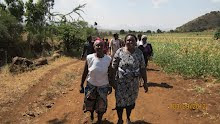
The cookhouse at the Ndunyu Secondary School was officially opened this week. This cookhouse will be used to prepare a noon meal for the students at the school.

It was funded by the funds raised by the Souris Village Feast.

Cooking African vegetables


Cooking African vegetables

Western Kenyans grow and eat traditional green vegetables including amaranthus, nightshade, crotalaria, spider plant, jews mallow and Ethiopian kale. These vegetables grow easily and are quite nutritious.

We arranged two training sessions for the members of the Muchui Womens Group and the Ruuju Wonens Group . Nelly Andisi, the cateress at the KARI Embu Research Station was our resource person. She grew up in Western Kenya.

She purchased all of the vegetables in the market and brought them to the session. Then she cooked them in front of the women, along with tomatoes, onions and cream.

She served each of the women a sample of each vegetable along with ugali (maize porridge).

We gave the women a package of each type of seed along with the vegetable and flower seeds generously donated by Veseys.

Vets in Kenya 2010 Wrap-up

February 11, 2010

So, the last of our exciting adventure is occurring; the packing is going on around me and concerns are expressed with the amount of wood products that we are bringing home. Reflecting on the past three weeks, I think the best experience was finding a strongyle egg on fecal floatation with Rosa, the laboratory technician at the Wakulima Dairy. We spent an afternoon going through how to perform a fecal floatation, but kept finding no eggs on the floatation. We were very frustrated with the whole process. Then we discovered that we were being incredibly smart and using the improper concentration of the floatation solution. Ah the hilariousness of it all. (I do enjoy my science dorkiness, don’t judge). Anyway, the next day we were very excited to find a strongyle egg (a very common parasite egg of cattle) under the microscope. Needless to say, there was much exclamation and hand slapping, all for a ridiculous strongyle egg (Rosa looked on with a smile of enjoyment in our elation, but I do think there was a hint of, these kids are crazy, where is the nearest line of help). The point is, we felt like we had really accomplished something there that afternoon because Rosa had not been identifying parasite eggs correctly. It was such a gift to know that we were able to help, even in a very small, parasitic egg, sort of way.

I would have never dreamed of the experiences that we have had in this country. We’ve met so many wonderful people here and have experienced such beautiful countryside and dewormed so many cattle. It certainly has been a life experience and I know that I will never forget the time I’ve had. My greatest wish is that the people we have interacted with have gained either some knowledge or help with the health of their cows and that their lives are a little easier.

Saturday, February 6, 2010

Making compost by Teresa Mellish


In August, we took samples of the soil farmed by the members of the Muchui Womens Group and the Ruuju Womens Group which sent to the Kenya ministry of Agriculture for analysis.. We found that the land was low in organic matter. This has resulted from growing maize year after year.
So Winston and Susan worked with the women to prepare compost piles on their farms. They prepared a fact sheet listing the steps in preparing a compost pile. They listed the materials that could be used to make a compost. They also included the reasons why compost would improve the level of organic matter and how higher organic matter would improve their crop yields in the future. Also it would reduce the need for purchased fertilizer and would hold moisture in the soil better.
They presented a seminar to both groups of women with a large diagram showing the layers of materials to be put in a compost pile.
Then they went out with the group to make a compost pile on one of their farms. The women had already dug a hole and had assembled the materials they have on their farms to make the piles. There were branches for the bottom. They had green material in the form of tithonia leaves. They had dried bean stalks and corn stover. They had ashes, top soil and manure. They also had water.
Susan jumped in the hole and started to lay the branches in the bottom of the hole. Winston forked in bean vines. But it wasn’t long before all of the women were adding materials under their direction and soon the pile was complete. We stuck a long hard wood stick down into the pile so the women can check to see if it is heating up.
In three weeks the compost should be done. The women have dug three pits so they can turn it as it matures.
We went back to see the pile on Thursday and it was already 140 degrees. We’ll check it again later.
We also saw many women digging pits and assembling materials to build their own compost piles.

Thursday, February 4, 2010

Farmers Helping Farmers Veterinary Student Blog Week 2

This past week we were joined by three Nairobi veterinary students who are also in their last year of school. We are all working together in the area of Meru with the Thubuku Dairy, as well as the Muchui and Ruuju women’s groups to help them learn about their cows’ health and improve their milk production. It has been a great to work with the Nairobi veterinary students and learn about their school experiences, as well as their personal lives. It doesn’t hurt that they also can help us diagnose some of the foreign animal diseases that they see here in Kenya but we don’t really hear about in Canada. We have been able to see a great variety of cases while here in the Meru region and the people are interested in learning and enjoy the seminars that we teach.

The entire farmers helping farmers team worked together yesterday to survey the Ruuju women’s group about their water tanks, gardens, and farm animals. It was a great time visiting the women and their families at their homes and discussing the benefits of the water tanks, such as a reduced risk of waterborne diseases and reduced amount of time boiling water and fetching water from a river. They also were happy to take pictures with us as long as they could view them after – which they always thought was pretty funny. The children are always excited to see us, especially the older ones; there have been a few days where we are chased in our car by yelling and waving kids – quite the experience!

As the week comes to an end it is hard to believe we have only been in Kenya for 2 weeks with all of things we have seen and learned. We will be heading out on safari in Samburu park this weekend, and then heading back to the Nyeri District to work with the Othaya Dairy again. It will be sad for the week to end as the Nairobi vet students must return to school as they have exams next week, but we can look forward to seeing them again before we leave as we are going to be visiting their vet school just before we fly out next Friday. Stay tuned for updates..

Sunday, January 31, 2010

Greetings from Kenya

Hello from Farmers Helping Farmers in Kenya,
Each year, 3 vet students from the Atlantic Veterinary College have been joining the FHF dairy project. Last January I and my two classmates, Gerald Dykstra and Shauna Richards, were excited to find out we would be going to Kenya. After months of preparation, we arrived Saturday night to the warmth and city noise of Nairobi, and spent the beginning of the week working in Mukurwe-ini. The Wakulima self-help Dairy there has been very successful and is expanding its operations and infrastructure. We spent the latter part of the week working in Othaya. There the country is beautiful and hilly, planted with tea and bananas. Of course, every farm we go to has at least one cow, usually with a calf or heifer. The people work hard, cutting forage for their cows by hand and carrying milk to collection points twice every day. Still, they are happy, and grateful for the help they have received from FHF. Everywhere we see evidence of past and ongoing projects, such as water tanks and school improvements. We spend much of the day going on sick cow calls, but the most important work we do is to give seminars on topics such as nutrition, mastitis prevention, and breeding. The farmers listen intently as Doctor John teaches the lactation curve, or the importance of feeding milk to calves. After the first seminar, one woman stood up and told the other farmers how, after the things she had learned at last year’s session, and making the simple change to three-times-per-day milking, her production was up. On Friday we left the hilly countryside of Othaya for Meru. We have spent the last two days working with cattle that are grazed in drier, flatter terrain, and mostly of the local Zebu breed. Today we held a clinic where, for 10 Kenyan Shillings per cow (about 15 cents Canadian) farmers could bring their cattle to be dewormed and seen by the vet if necessary. We saw 505 cows, bulls, and calves today as a little donkey watched on from beneath the meagre shade of an acacia tree; a long, hot day, but very satisfying.
Stay tuned for more
Aleta Schmah,
Atlantic Veterinary College Class of 2010

Wednesday, January 27, 2010

Amazing Maize


by Teresa Mellish

The maize crop at the Ruuju Primary School is amazing! We saw yesterday as we travelled throughout the Marega area that their crop is typical of all the fields. After two years of drought, the women are so excited.

Here is a photo of Winston Johnston with Jane and her daughter from the Ruuju Womens Group.