Monday, August 19, 2013

Farewell Kiirua!


I am sad to say that we are entering our last week here in Kiirua.  It has been an exciting 12 weeks in Kenya; we have learned so much about ourselves through our work in the hospital and in the communities.

We have met so many amazing and inspirational people here in Kenya.   A few weeks back, we were invited to sit in on an HIV support group, held by staff at the hospital once per month.  This was a positive and emotional experience for me as I witnessed so much strength and courage during that meeting.  Members were so supportive of one another and their happiness and determination was noteworthy.  During the meeting, individuals asked questions ranging from diabetes  management to making healthy lifestyle choices.  They were very grateful of our presence and asked us many questions.  We have had limited exposure to HIV/AIDS in Canada so we told them that we wanted to learn from them.  This was one of many experiences that has opened my eyes to how truly privileged I am to live in Canada and to have my health.


My time in Kenya has given me newfound respect for individuals that live in substandard conditions.  The people of Kenya have a contagious spirit that makes you look at life in a whole new light.  Kenyans are hard working and innovative-they make the most of what they have.  I have witnessed numerous occasions in the hospital where staff members have had to use alternative methods because they have limited resources.  I have seen surgeons use bladder catheters as surgical drains because drains are limited and reserved for emergencies.  Although they don’t have the resources that we have in Canada, the things they do and the choices they make are safe and logical.  They take things to a new level, something that Canadian healthcare professionals never have the need to do.  They are creative and they are successful.

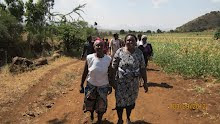
Although I have had limited opportunity to work within the rural Kenyan communities, I have witnessed the incredible strength and willpower of the Kenyan women.  These women are unlike any I have ever encountered.  They work long days; managing their farms, collecting firewood, and feeding and dressing their families while maintaining an air of grace and pride.  The women will go to bed hungry if it means that their children have had sufficient food during the day.  The women were very grateful of our presence and welcomed us into their homes (Karibu).  The work of Farmers Helping Farmers and the support of CIDA have improved many of these women’s lives drastically.  Many have screenhouses for their crops to grow, water tanks for clean drinking water and kitchen gardens, where they can grow green vegetables and vitamin A rich vegetables for their families.  By making these changes in the community, these organizations have started a health promotion initiative that will hopefully minimize hospital visits for these families and improve their overall health.

I leave Kenya feeling grateful that I have been given this opportunity.  It has helped me grow as an individual, made me excited about my career, kindled a love for travel, and compelled me to do further trips that work towards making communities sustainable.  I hope to be able to share my experiences with others so that they feel compelled to witness what I am witnessing.  As well, I hope to inspire others to become involved with Farmers Helping Farmers or other organizations, to do their part in helping underdeveloped communities grow stronger. 

-Danielle Perry; Nursing Intern


Friday, August 2, 2013

Vet team working in Mukurwe-ini , Kenya


Vet team working in Mukurwe-ini doing research on feedning cows and calves owned by farmers who ship milk to the Mukurwe-ini Wakulima Dairy Ltd.
Left to right
Dr. Shauna Richards (AVC'10), Dr. Gertrude Shepelo (UoNairobi'12), Genevieve Luca (FVM'16), Jessie Wilkins (UoCalgary'15) and Dr. John van Leeuwen (AVC Professor)

Saturday, July 27, 2013

The People You Meet

By Jessie July 23, 2013 5:47 pm
We came at night – it felt strange because we typically don’t go out after dark falls.  As we walked to the door, I could see a beautiful set of smiling teeth and a pink dress suit.  Our host greeted us warmly, and took us up the front stoop.  As we were about to go in, she whispered that she was just finishing hosting a big celebration for a recent graduate of IT school.  She apologized that they hadn’t quite left yet, but were about to leave shortly.  We took off our shoes and she opened the door.  There were about 30 people inside, all with their heads bowed – they were praying a blessing over the new graduate.  We paused at the door to let the prayer finish.
As we entered, we shook the hands that came from every direction and were quickly shown a seat.  All of a sudden cake appeared before us, and food started to multiply on the kitchen table.  We chatted with some of the guests, then filled our plates to overflowing with mokimo (potatoes), githeri (bean stew), lamb, chapattis, fresh fruit, and rice.  It was delicious.
Then our host was freed up enough to sit and have a chat with us.  I was already in awe of this formidable women and her hospitality.  There had been a little mix up.  We were supposed to stay with her over the weekend, but somehow the dates got miscommunicated and she already had a houseful of guests from the graduation celebration.  She insisted that we still show up for a meal – all without ever having met us before.
Jennifer Murgocho works in association with an organization that were are working with in Kenya called Farmers Helping Farmers.  She is based in Meru – and we were visiting for the weekend.  She told us about her involvement with Farmers Helping Farmers.  She detailed the schools, women’s groups and communities that she has worked with, and the changes she has been a part of in the years past.  As we sat and listened, I reminded myself what a privilege it is to listen to someone talk about their true passion.  It’s even more of a privilege to see that passion turn into reality through the course of their life work.  There are some people that I have sat with in my life that leave me deeply inspired and hopeful.  Jennifer was one of those people, with one of those incredible stories.
I was reminded that a life well-lived goes far beyond a job.  A life well-lived is passionate enough to host a graduation celebration with a large guest list.  To invite complete strangers into your home for a meal.  To make people feel welcome, cared for and understood.  To be compassionate enough to see areas that need improvement, brave enough to act and committed enough to follow through.  These are great life lessons for a veterinary student to learn and remember.
I can’t say I’ve ever had milk directly from a cow.  It was boiled of course – to kill all the nasty pathogens that raw milk can harbour.  I’ve never been able to directly attribute my milk products to a specific cow.  It’s kind of an odd feeling to look at a cow while you are drinking the milk it made a few hours earlier.  But when I think about it, and it’s really not all that odd at all.  And it’s far more rewarding to see a product go (as we say in food safety courses) from ‘farm to fork.’
It was freezing on Monday, and the warm milk was a welcome gift.  There were four of us on the farm that day and we each had a glass.  I’d estimate that we drank roughly a litre of the farmer’s milk.  In Kenya, farmers are paid 27 Kenyan Shillings per kilogram of milk produced.  That’s just over 30 cents Canadian.  For many farmers, the milk proceeds are a large proportion of income for the household.  Most cows in Kenya are producing roughly 9 kg per day, compared to a typical Canadian cow which produces roughly 32 kg per day.  It’s also important to keep in mind that most farms in Kenya have less than 3 actively milking cows at any given time.
So this hot milk on a cold Monday morning was not just a simple gift.  The farmer’s name is Waruguru.  She told us how two of her daughters passed away, so she is responsible for feeding and caring for the cow.  She has one daughter left, who was there to help answer some of our questions and help with the farm.  Her grandson was there as well.  The teachers strike ended on Monday, with most students heading back to classes.  His presence on the farm likely means that school fees are too expensive, and he is not able to attend classes.  He was incredibly helpful – holding the calf, getting me soap, moving the cow into the milking pen, and holding supplies for me.
While Jennifer inspired me with her courage and commitment, Waruguru inspired me with her kindness and generosity.  Her gift to us was of high personal cost and I’m deeply appreciative for it.  Two stories from two strong Kenyan women who have big enough hearts to give – at times beyond their means.
And this is why I love veterinary medicine, and why it’s so much more than just a job to me.  Students that want to become vets because they love animals and dislike people are misled.  People are our job.  A veterinarian gets unique insight into the lives of the people owning animals and the ability to make a real difference in both the lives of the animal and it’s human.
And once in a while, their humans make a real difference to us, too.

Wednesday, July 24, 2013

Dairy feeding research

Hello Farmers Helping Farmers Blog readers, 

My name is Shauna Richards and I am a veterinarian who has returned to the Atlantic Veterinary College (AVC) to pursue a graduate degree in veterinary epidemiology (study of disease in populations).   My project at the AVC is supervised by Dr. John Vanleeuwen and funded/ partnered with Farmers Helping Farmers, The Canadian International Development Agency, Association of Universities and Colleges of Canada, AVC, Vets Without Borders (VWB) and the University of Nairobi. 

The project aim is to determine the cost benefit of feeding additional purchased feeds to dairy cows and calves owned by smallholder dairy farmers in Kenya. Specifically we are working with farmers who are members of the Wakulima Dairy Ltd. in Mukurweini, Nyeri County.  While it may seem obvious that more feed will allow a cow to produce more milk, and allow a calf to grow faster, the concern is if buying these additional feeds will make the farmer money in the short and long term.  

The study plans to purchase grain and mineral for milking cows and feed them in varying amounts to locally owned cows to determine their milk production and farmer’s subsequent income over the first 2 months of a cows lactation.  At the same time the calf of the cow will be fed varying amounts of purchased grain and milk to determine if they will grow faster.  In the long term calves which grow faster will become productive herd members earlier, and therefore make the farmer more money.  

In addition to the feeding part of the study we will be evaluating and sampling milk from the study cows to determine the rate of mastitis in smallholder dairy farms in Kenya. We will also evaluate the pathogens causing mastitis.  Finally we will be evaluating the rate of gastrointestinal pathogens in the study calves. 

This study is unique in that we have 111 farms enrolled and we will make repeated visits to the farms over a 2 month period.  This will provide us with better data in order to determine the cost-benefit of additional feed, the rate of mastitis in cows, and the rate of gastrointestinal disease in calves. 

Aside from providing better data, the repeated farm visits allow us to develop a relationship with the farmers and allows us to make helpful recommendations on how they can improve their dairy farm.  This is important because aside from the additional feed that the farmer is receiving, they are also gaining knowledge.  And while we aren’t allowing them to share feed with other farmers, they certainly can share what they are learning! Following completion of the study we plan to publish the results, and to also disseminate them to farmers who are members of the WDL so they can make sound financial decisions  on their dairy farms. 
I would also like to briefly describe the team members whom are working here in Kenya for future reference in additional blog entries:

Genevieve: second year veterinary student at University of Montreal whom is funded by VWB

Jessie: second year veterinary student at University of Calgary whom is also funded by VWB.

Shepelo: Veterinarian from the University of Nairobi, who is also pursuing a graduate degree in veterinary epidemiology and is running the study with me here in Kenya.

Priscilla: Our local and very talented, very friendly translator, whom I could not do any of this project without!

Ephraim: One of our drivers, who also commonly stands in as veterinary technician on all of our farm visits.

Godfrey: Our other driver, who often provides his milking skills to collect milk samples, as well as provides excellent comic relief.

Gerald: Coordinator at the Wakulima Dairy and for this project.

I hope this blog entry provides some context to the wonderful entries by the 2 veterinary students whom I am working with this summer.  

Sunday, July 21, 2013

Manners and Manure

By Geneviève - July 21, 2013 - 5:59 pm
The inhabitants of Kenya are known for being a warm and welcoming people. After spending a few weeks in their company, I can but confirm this fact. Kenyans are not only thoughtful hosts, they also show a politeness and manners often incompatible with our North-American placid, planning and always-in-a-rush habits. Indeed, what Canadian city dweller wouldn’t be suspicious, sometimes scornful, of a handshake from a perfect stranger met on his way? And who would actually make – or even accept – an unexpected invitation to have a cup of tea in the middle of an already busy work day? Yet these things are common in this country that welcomes me so generously.
According to good manners here, you should greet anyone you meet with a good handshake and a cordial “Habari”, often followed by a series of other greetings. Whether it’s a collegue, a new acquaintance or someone that will remain a stranger doesn’t matter : it’s greeting before talking. And so, when our driver stops the vehicule to ask someone passing by directions to a certain farm, a hand enters by Ephraim’s opened window and must meet the hand of every single passenger, accompanied by many “habari”, before the person, bent over the window, will give us the desired answer. Even one with a wet or dirty hand cannot escape from this human contact : in those cases, he must present his arm, flexing the carpal joint, and the other person can then grap and shake his forearm, just up the wrist.
Kenyans also have the habit of saying “sorry” when some undesirable thing happens to you. Therefore, every time I fall on a slippery slope, every time I drop my pen in the mud and every time I hit my head – which happens every single day because of the acrobatics I perform to get inside the pens – the witnesses will immediately say “sorry”, even though these troubles are entirely my fault.
Generosity is yet another aspect of the Kenyan culture. When we are visiting farms, we frequently leave with a bunch of bananas, papayas, sugur canes, eggs, corn, or avocados as big as a head. We tell the farmers that they don’t have to give us anything, that their participation in our study is more than enough, but they are happy to share the result of their laboured soil, in addition to the time they already spend with us. Besides, I doubt Francis, our cook, will ever be able to make enough banana bread to empty our stocks.
Sharing is an essential value here. Even those who haven’t got much will give you all they can possibly offer if you are in need. This weekend for example, we had planned on going to visit the students from UPEI staying in Meru (they are also travelling for some projects with the Farmers Helping Farmers organization). A misunderstanding kept us from staying at Jennifer’s house (she is an active member of a wowen’s group for community development and used to be their chairperson), since she thought we were coming on the next week and had therefore no more rooms available for Saturday night. Dismayed by this misunderstanding, she wanted us to sleep in her own room rather than to have us staying in a hotel a bit further away. We simply couldn’t accept such an offer, so she almost forced us to at least come at her house for dinner, and she nicely received us even though she already had a very busy evening.
The Kenyans’ generosity is only equalled by the local hospitality. We often receive invitation to sit down and have a cup of tea. Our daily schedule is quite busy and we tend to decline those offers, but the farmers insist, some of them even adding that it is not very polite to refuse. Therefore, except if we really are in a hurry – which seldom happens, with the African beat we are starting to catch – we let ourselves be guided towards chairs, wooden benches or even inside the house, in a small living room, to sit down and to take the time to enjoy our hosts’ company, a much appreciated token of gratitude. They sometimes serve us food and, when it’s the case, it’s usually in enormous quantities. Of course, it is considered rude not to finish your plate…
Farmers wish so much to show good manners as hosts that they insist on having us sitting on a piece of decorated material instead of directly on a log and they tell us not to remove our boots when we come inside their house. Can’t they see that we already are covered in dirt and other filthy things? They don’t seem to care : they wouldn’t accept to see a bit of dust from a log or from the floor going on their guests’ precious scrubs. In front of those very – too? – thoughtful hosts, we smile, but we let them understand that we would actually be disrespectful to such good manners by covering the place with manure.

Geneviève C. L.

Saturday, July 20, 2013

The Good Idea

By Jessie - July 17, 2013 - 6:42 pm
Today, as I was rinsing manure from my armpit, I thought about some of my experiences in Kenya so far.  I had just been covered head to toe (literally, some even went in my eyes and ears and mouth) with manure from an unruly cow.  One of the worst I’ve encountered here, actually.  Although I don’t really blame her for protesting the rectal thermometer, it really doesn’t compare to having a rectal palpation done.  Pretty sure my arm has a far greater circumference than that little thermometer.  But she jerked, kicked, and jumped out of her restraints – even testing the sturdiness of the milking pen itself (it held, but a few tense moments passed in which I had devised a strategic plan to prevent her from falling into the 6 foot pit right in front of her, and corner her so that we could have some hope of roping her back in – all the while leaping over 5 foot fences to avoid being trapped in the fragile structure).
I’m most thankful my plan remained untested.
I’m thinking: this is the third farm of the day.  I’m now doomed to spend the rest of the day covered in manure.  I’m sweating from the sun and from the stress of planning an evacuation plan for myself and a thousand pound beast.  I’m hoping that the manure that went in my mouth isn’t harbouring a severe strain of Salmonella or E.coli.  I’m dreading the monstrous hike up the mountain to get back to the car.  I realize that thoughts along this vein enter my brain almost on a daily basis.
It made me wonder why I thought Kenya might have been a good idea.
When I got to the top of the hill, I was greeted by my new driver, Godfrey.  He laughed immediately upon seeing me and told me I was ‘SO CLEAN.’  I couldn’t help but smile.  On the way to the next farm we shared bananas, and chapatis (a most delicious flatbread which we take turns buying each day).  We joked about the outrageous cow.
We carried on with our day – getting more covered in manure, spilling iodine all over my pants, sweating profusely and struggling through communication mishaps with our farmers.  We shared chai tea with two families. I chatted with a group of 8 or 9 boys and learned what animals they had on each of their farms, what they wanted to be when they grew up, and how to take care of pigs.  We laughed as our team (Shepelo, Godfrey and I) ate more bananas and avocadoes than I have ever consumed in a week, let alone in one day (I ate 6 bananas.  In one day).  We almost cried we laughed so hard over Shepelo’s story of the leaking hot water bottle in her bed.  We were invited in for supper at our last farm and couldn’t believe the size of the bowls of stew and rice put before us.  We finished enrolling our last farm in the study – farm 110.  We came home to another huge dinner prepared by an ever-smiling Francis.
Although each day brings its’ own struggles, by the end I’m always reminded why Kenya was a good idea.  The people I have met, the team I am working with, the positive impact that the research is already having, the growth in my practical skills, and, well…let’s be honest – the food.
Yesterday we visited a farm where the farmer had 2 cows and a calf.  After we had finished our work, he invited us in for tea.  His wife had
just passed away the month before.  He has a beautiful farm, and is taking our advice and rebuilding some of his pens to increase cow comfort.  He asked me if I planned to come back to Kenya in a few years.  I said I hoped I could come again.  I told him I would visit again in a few weeks – but he insisted that I come in a few years.  He wanted me to come back to his farm, because he wanted to show me the improvements he would make after 3 years’ time.  He told me he hoped to grow his herd to a maximum of four milking cows, because he knew that is all
that he could handle.  He mentioned that he has already seen a gain of 2 L per day in his milking cow for the past two weeks he has been involved in the study.  He was very pleased with this, and wanted to increase his ability to feed and care for the cows in the best way he could.
I sit with a person like him – someone who is realistic about their limits, trying really hard to take recommendations to improve the farm structure and cow production, and who is a proud Kenyan – and I can’t help but feel a little overwhelmed to have been given a little window into his life.  I think to myself – partnering with people like this are what makes Kenya a great idea.
It might even make me thankful for the manure in my armpit.


Friday, July 19, 2013

Nutrition teams finish home assessments of food security


Megan and Sydney here-the UPEI nutrition interns for 2013.  After a long and eventful month, the food security assessments of 2013 are officially under wrap!    We have visited homes of 26 women from the Muchui and 12 women from the Ruuju Women’s Self Help Groups. During our visits, we have assessed women’s food security using a standardized validated questionnaire which assesses everything from their worry about having enough food for their families to how often they have ate less, missed meals or entire days of food or went to bed hungry.  
Doing our first interview with Penina in Ruuju
We have also assessed what they are eating, and how often they are having the nutritious foods grown in their shambas (farms), with the help of Farmers Helping Farmers agricultural projects. (More on that in another blog!) 
After doing 38 interviews, we have come to love and respect these women and for the hard work they do day after day just to keep food on their table for their families. They greet us warmly with big smiles, and often give us Kenyan tea, or insist that we take a papaya or eggs home with us.  We have noticed a substantial difference between the two communities. Even though the communities are only 1 hour apart, the climate, the resources and the people are very, very different. It is dry in Muchui, but most of the women have a substantial amount of land and screen houses or greenhouses. In Ruuju it is very tropical, but the women have very little land and most of them do not have screen houses or greenhouses.  From what we have seen, Muchui is far more food secure than Ruuju. Many of the Muchui women are able to eat the kinds of foods they prefer and the kinds of foods that they need. Most of the women answer ‘no’ to the questions ‘did you go to sleep hungry at night’ or ‘was there ever no food to eat of any kind’. However, they are still answering ‘yes’ to ‘did you worry that your household would not have enough food’.  It appears that almost all women, no matter what community they are from, are worried to some extent about where their next meal will come from. 
We gave every woman we interviewed a bottle of fortified vegetable oil as a small token of our appreciation. This is Purity, who is a very successful farmer!
The good news is that we have observed a strong correlation between the condition of their crops, and their food security levels. Basically, the healthier the crops are, the more food secure the women tend to be.

The women of Ruuju seem to be far more food insecure. Almost all of the women are only eating two, small meals a day and all of which have very little nutrient value. The women are answering ‘yes’ to ALL of the questions being asked about food security, and it is happening over 10 times per month. This is WAY too often.   
Interviewing Sarah in Ruuju under a canopy of banana trees. Our amazing translator Rosemary is in white.
One woman that we interviewed last week in Ruuju, sticks out in my mind (Sydney) as she has been the most food insecure that I have seen so far. I keep meeting and interviewing women and I think “it could NOT get any worse than this”… but, unfortunately, It does. Some of the stories are inspirational and some of the stories are absolutely heartbreaking. Anyway, when we arrived at the woman’s house in Ruuju, her son came up to Megan and I and passed us a note written in English. Half of the page he used to thank us for all we have done (I suppose he means FHF and the previous nutrition students) and that he and his mother are so appreciative. The end of the letter went on to ask us if we were able to pay for his education so that he could get a better paying job and help out his mother. At first I thought it was really awkward and inappropriate that he gave us the letter…until we interviewed his mother. I suppose desperate times call for desperate measures. It is she and her 15-year-old son living in the house. The house was nothing more than a wooden box with a roof and some foam on the floor to sleep on.  We couldn’t sit inside because there was nowhere to sit. So we resorted to sitting on the edge of the chicken coop. This woman’s 24h recall consisted of rice, beans, water and passion fruit. That’s all she had to eat for the day and that is most likely all that she has to eat most days. She said her last good harvest of maize and beans was in August of 2012! This explains why she has become so food insecure. Her crops are not growing now, she does not expect to have a good harvest this season, and we can only hope the season after this one, will bring a miracle. This woman reported to going to sleep hungry over 10 nights in the past month, she often has no food to eat of any kind, and she has also often had to eat smaller and fewer meals then she felt she needed. It was heartbreaking to see this.  When we left her property, she ran into her house and came out carrying about 15 avocados with huge grin on her face. I looked over at Rose (our translator) and said that I didn’t want them, that I wanted this woman keep her avocados and to eat them everyday. Rose said I had to take them and that it was this woman’s only way to say thank you to us. It would have been rude if I had not taken them. So Megan and I took the avocados, and left the smiling woman behind. I wish that I could come back every year and work with the women, and personally see the changes we are making. I wish there was more that I could do.  (Jen sent money for a bag of maize for her, which will help in the short term…) It is especially hard for me (Megan) to go into their homes and see how hard they work but then go out into the community and see men sitting around the shops doing nothing but chewing Khat (a drug that is legal here).
A typical scene with men gathering at the shops
             In 2012, nutrition interns (Janet Gamble, Samantha Smith and Fergie Wallwin) found that women with a screen house or a greenhouse were less likely to report high levels of food insecurity compared to women without a screen house or greenhouse. For example, the number of women reporting experiencing anxiety about having enough food, reduced quality of food and reduced quantity of food these concerns was significantly lower among the women with screen houses or greenhouses compared to those who didn’t have them. These findings suggest that the presence of a screen house or greenhouse significantly buffers the negative impacts of poverty and crop conditions.  We are just now analyzing the data from this year’s interviews, and will be preparing a report for Farmers Helping Farmers so that they can see whether their initiatives (funded by CIDA) have continued to have this positive impact. Based on what we observed, we expect more good news about the impact of this agricultural and nutrition project.  
A Screen house, which protects crops from birds, insects and harsh sun and wind!
The two Biology students, Alicia and Jen, accompanied us on the Muchui home visits. (We did the Ruuju interviews ourselves).  By having them come to the interviews with us, we were able to learn a lot about why they were here, and the benefits of the energy efficient stoves provided by Farmers Helping Farmers. We will leave it to Alicia and Jennifer to talk in more detail about that!
I (Megan) am so grateful to these women for allowing us to come into their homes and get some insight into the way they live their lives. These women are extremely strong , and it is meeting them in their homes that have given us a real Kenyan experience that would not have been possible had we traveled here for any other reason. One of my favorite parts about walking to the women’s shambas (farms) were the children we would see along the way: they are so well behaved and happy whether they are rolling a tire down the side of the road for fun or working and carrying a bag of maize on their back.  Overall, even though they have been hard sometimes, we have loved doing the home assessments and we are sad to see them come to an end.

Our next project, which we are excited to get started on, is an infant feeding video for the hospital here in Kiirua. This video will focus on breastfeeding and infant feeding.   Stay tuned for our experience on directing a video in Kenya…it could get interesting!

Megan and Sydney (Meggie and Sydee)