Tuesday, July 2, 2013

Blogs by Jessie Wilkins and Genevieve Luca sponsored by Vets Without Borders

107 Years

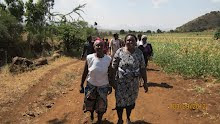
After we had finished our work yesterday, we had the opportunity to visit the family home of our translator, Priscilla.  There we met her mother and her grandmother – who is 107 years old.  She greeted us with handshakes and warm eyes, although she could speak
no English.  It is a rare opportunity, even in Canada to meet someone with this many years behind them.  I stopped for a minute to appreciate how many steps those feet have taken in a place like Kenya, and how much change her eyes have seen in the past 107 years.  It doesn’t matter where you are from, it’s always a humbling experience to meet the elderly and appreciate some of their life story.
We’ve been in Kenya for a week now, working on our project for 4 full days.  We are doing research in partnership with Farmers Helping Farmers, the University of PEI and the University of Nairobi.  The purpose of the research is to see if dairy farmers in Kenya will be able produce more milk and higher quality offspring if the nutrition of the cows is increased.  The farms are small by Canadian standards, with 3-5 cows on average, and the farmers are primarily women.  We hope to find that improved nutrition will increase production and be cost effective for the farmer.  Increased production should be obvious, but the higher costs for good quality feed may be an unreachable goal for a farmer.  The decision to feed a cow or a family is a real consideration here.  The money must be taken from somewhere else – on subsistence farms there may not be a large pot to shuffle money around in.  Our challenge will be to prove that feeding better will be more economical in the long run for the family.
I’ve always felt a bit uncomfortable that the ‘birth lottery’ landed me in a place that doesn’t struggle for basic daily needs.  I’m a proud Canadian and thankful for my home, but it has always bothered me that a large percentage of the worlds’ population has to struggle to meet basic needs.  There are some things l think people everywhere should have access to – respect, health care, water, a shelter and food.  Despite the wealth available in the world, I have met many people that still aren’t able to satisfy these needs (even in developed countries like Canada).  I’ve seen it myself, it’s impossible to ignore.
My decision to participate in a summer internship with Veterinarians Without Borders this summer was heavily influenced by a desire to be involved in a project that has potential to increase equity among people.  Although I expect to have opportunities to contribute in Kenya, my larger hope is that I will go home with ideas on how to promote and participate in international development from Canada as well.  I hope
I can begin to develop realistic expectations of what international development really means, and an appreciation for some of the methods used.  My expectation is not to save the world, but to provide a small piece of the puzzle that our skill set as veterinarians will allow us to contribute to.
So our past few days have been spent knee-deep in manure, slipping down steep hillsides to reach the cows, and having kids stroke our strange-looking hair while we are busy listening to ruminal contractions.  We will have ample opportunity to fine-tune our veterinary skills and hopefully provide meaningful resources that can help increase milk production – which has already been a rewarding experience.
However, I think the moments that will last with me and continue to inspire passion in my heart for international development are the ones like yesterday, when we met Priscilla’s 107 year-old grandmother.  Her hunched back and worn face tell the story of a hard life.  I hope that we can be a very small piece of the puzzle that could improve the quality of life for her grandchildren and great-grandchildren.
Stay tuned, between me and my Francophone counterpart, we will fill you in with more details of the trip as it progresses!

Kenya 2013 Introduction

By Geneviève 12:55 pm
Introduction au projet Kenya 2013
Bonjour à tous nos lecteurs,
Nous achevons notre première semaine au Kenya et, après six jours de travail, nous profitons d’une journée de repos bien méritée. Jessie et moi avons maintenant le temps de vous tenir au courant des débuts de notre périple au Kenya. Nous avons conclu qu’étant la French-Canadian du groupe, la tâche m’incombait de rédiger un article en français, ce qui est loin de me déplaire. Cette première publication sera plutôt une mise en contexte; les suivantes seront sans doute plus descriptives ou anecdotiques.
Notre projet au Kenya, en association avec l’organisme Farmers Helping Farmers, consiste à collaborer avec une coopérative locale, Wakulima Dairy Ltd., afin d’évaluer le rapport coûts/bénéfices d’une meilleure alimentation pour les vaches laitières en lactation ainsi que pour leurs veaux nouveau-nés.
Je suis arrivée à Nairobi le lundi 24 juin vers 1h30. Après un semblant de nuit dans une auberge (« Guest House »), j’ai rencontré mes deux mentors, Dre Shauna Richards (la responsable canadienne du projet de recherche) et Dr John Van Leeuwen (son superviseur). Nous avons passé l’avant-midi au Nairobi College of Veterinary Sciences avec Dre Gertrude Shepelo (la responsable kenyane du projet de recherche) afin de réviser les documents et questionnaires du projet.
En après-midi, nous sommes retournés à l’auberge, où nous attendait Jessie, arrivée quelques heures plus tôt. Nous avons fait connaissance et avons clarifié quelques aspects du projet. Le lendemain, nous avons pris la route de Mukurwe-ini, village au cœur de la région où se situent les fermiers associés à la coopérative. Ce n’est que mercredi que le vrai travail a commencé.
Wakulima Dairy Ltd. nous fournit à chaque jour une liste de fermes comprenant une vache en fin de gestation ou qui a vêlé il y a moins de cinq jours. Pendant que Shauna et Shepelo remplissent un questionnaire avec le propriétaire de la ferme – non sans l’aide de notre traductrice Priscilla – Jessie et moi nous chargeons de l’examen général des bovins, de vérifier la présence ou l’absence de mammite chez les vaches en lactation, de prendre un échantillon de sang pour chaque veau à l’étude, d’étiqueter (« tager », en bon québécois) la vache à l’étude ainsi que son rejeton, de repérer les éléments du logement à améliorer, etc. Les fermiers reçoivent également des instructions à suivre concernant l’alimentation de la vache et du veau à l’étude. Les deux premiers jours sur le terrain, nous travaillions tous les cinq ensemble, mais désormais, nous sommes séparés en deux équipes pour couvrir plus de fermes : Shepelo avec John; Shauna avec Jessie et moi.
Chaque équipe visite de cinq à six fermes par jour; chaque ferme comprend habituellement d’une à quatre vaches, de zéro à quatre génisses et de zéro à trois veaux. Nous ne parcourons pas nécessairement de longues distances, mais il faut considérer que nous conduisons sur des chemins de terre étroits serpentant à flanc de collines escarpées. Cette géographie particulière nous donne droit à notre petit orchestre privé, composé du chant de la suspension, du roulement tonitruant du moteur, du vibrato des portières, des percussions dans le coffre arrière et d’autres sons dont il vaut sans doute mieux ignorer l’origine.
Le soir, nous retournons à la maison que nous louons, non loin de la coopérative, où nous attend Francis, notre cuisinier, avec un souper constitués de plats locaux. Une fois repus, nous préparons la paperasse pour le lendemain et discutons de sujets divers.

L’interaction avec les habitants de la région, les différences culturelles, les paysages exotiques et l’expérience que nous acquérons sont des sujets trop vastes pour être abordés dans une première publication.

Au plaisir de vous faire rêver davantage dans les semaines à venir,

Jessie et Geneviève

Nursing in Kenya

Hey! Vanessa here. I'm one of the two nursing students in Kenya this year. I just wanted to let everyone know how things are going at the hospital. Today I started my first day in surgery after spending four weeks in maternity. While I don't think surgery's my thing since I have bad feet, I loved my first day! On Mondays there aren't a lot of surgeries, but we had a woman come in who needed a cesarean. The nurses here have a broader scope of practice and actually get to scrub in on surgeries and assist. For this surgery, I got to assist and I learned so much. Another nurse scrubbed in with me so that she could take over in case anything went wrong, but it was a very smooth procedure. The doctor was great. I knew generally what was expected of me since I have seen several cesarean births before, but he let me know exactly when to hold what, and he explained his rationale along the way. I can't wait to go back tomorrow, but after four weeks of this, I think I'll return to maternity.

I feel like I'm becoming so much more comfortable with my nursing skills here since everyone expects a lot from me, and I need to be confident in what I'm doing. Since our maternity rotation at home is mainly focused on post-partum (after birth) care, there was a lot that the nurses taught me during my rotation here. It's really interesting how things work in this hospital. The nurses have a lot more responsibility in labour and delivery too, as they conduct the births and pretty much do everything unless there's a major complication. Being almost a nurse myself, they have been teaching me everything they know that I haven't gotten a chance to learn. The nurses and doctors here sure are knowledgeable! I love being a part of the doctor's rounds because he speaks very good English and he is usually teaching a clinical officer while doing the round. Here, a clinical officer is like a doctor, except they don't perform major surgeries. The doctor, as well as the rest of the staff have been very receptive to any questions that I might have. They are also very eager to learn how we do things in Canada. While I only spent two days in labour and delivery back home, I learned a lot in class and still have a lot of knowledge to share. I have been making some suggestions and questioning a few things, but, for the most part, I have been very impressed by how things are done in Kenya. Most of their standards are similar to what we would do in Canada. Some things are always practiced, so I make sure that I uphold them when I am performing the procedure, and I try to encourage sterility or whatever it may be when appropriate.

Overall, I am having a wonderful time in Kenya. I am learning so much about their hospital and their culture, and I love teaching about Canada and our standards.

Friday, June 21, 2013


Sydney here- one of the nutrition interns for 2013. I have to tell you about one of my days in Kenya...
Have you ever woken up and immediately known that it was just not going to be your day? You know those days where you are so grumpy and angry at the world for no apparent reason? Well today was one of those days for me. I was waken up at 6am to the sound of PIGS screeching their little heads off and birds squawking like there’s no tomorrow. I barely slept all night and I was mad at the Internet for not working when I wanted it to. Things just weren’t going my way. I also woke up remembering that I had completely forgotten to inform TWENTY people of a lunch education session I was holding later in the day and then somewhere between 7am and the sound of the pigs screaming, I accidently fell back asleep. I few hours later I woke up in a panic realizing I had fallen back asleep, and had forgotten to set an alarm. See, at 10:30am I was supposed to go to Mamma Salomi’s house for a Champs Education session!
I showed up at Mamma Salomi’s and our women champs greeted us with huge grins on their faces, so happy to see us and show us what they had done. --- They did ALL the cooking – they were all ready and prepared for the education session! I was SOOO happy to see them all there waiting with the food already made, and the nutrition messages studied and ready to be put into action. I spoke with William (the head master of the school that we were supposed to be presenting at) and he was able to scrounge up about 20 parents/teachers to come sit in our session. The champs completely took over and it was so incredible to see. They taught all the nutrition messages to our participants and didn’t even have to use the binders we made them. Because they had LEARNED IT. They didn’t need the notes as guidance; they really knew what they were talking about-or I think they did. …Everything they said was in Kameru so for all I know they could have been talking about how strange the mazungoos were. But I’m pretty sure they were teaching about nutrition. I heard “Vitamin A” and “Orange sweet potato” a few times. Ha Ha!
Mama Salome (Rael), a champion farmer and Muchui woman, explains how to make githeri nutritious with orange sweet potatoes or pumpkin, soaking and adding greens
         So, Megan and I sat back and watched the champs take charge. Today I saw something that really put a smile on my face. I was so proud of the champs and I was also proud of myself, because without me, Megan, Jen, Colleen and the previous nutrition students who have come here (Kaylynne, Christina in 2010, Harrison and Amy in 2011, and Janet Fergie and Sam in 2012), today would not have gone as well as it did. Today I feel like we really accomplished something! I guess this is the reason why today became my favorite work day so far.  I really got to see the women champs take charge of everything. They did all the cooking, all the teaching-they didn’t need us for anything but support. It showed me how enthusiastic they are to learn and how adaptive they are to learning new things and ways to use the most out of the resources they do have, to create healthier meals for their families. The messages we have been teaching for four years, about ways to incorporate the healthy crops that Farmers Helping Farmers have supported them to grow, have been received!

       After our session, there was food left over so we gave the rest to some of the children at the school. There was also a bit of time to kill before we were heading back to the compound, so some of the kids pulled me into a classroom and started singing and dancing for me. So of course I had to join them!! A white girl awkwardly dancing with 30, 3-foot African children was probably not a very pretty sight. After all the singing and dancing I was told that I HAD to teach them something in English…I had no idea what to teach them? I’m not a teacher? I don’t know what 5-8 years are capable of learning? So I took the chalk…and went with it! First I started with the basics…you know 1 +1 = 2, 2 x 2 = 4, but they were catching on a bit too fast so I switched things up. Soon I was telling the children how important it was to have iron, calcium and vitamin A everyday and which foods they could get it from. That sugar was bad for them, and that diabetes is on a rise even in Africa….
Oh my gosh, those kids are smart!! I wish my brain could catch onto things as fast as theirs. 10 bucks says they take everything I told them today back to their families and tell them all about it. Kenyans are so willing to discover new things here and will go to every effort they can, to learn as much as possible.
       
I have already learned that things do not go as planned, things are never on time; people are not where they are supposed to be and, oh, the list goes on.But I am growing to accept that and I am adapting to it as well. Actually something exciting that I am adapting to is the FOOD! Yay!! I actually find Githeri quite delicious and could have even gone for a second helping...but i didnt. Ha Ha! ….Anyway, another lesson I learned in Kenya is that even though things don’t always go as they are supposed to-everything all works out for the best. Because

Today could not have gone better.

And tonight I will be going to sleep on the right side of the bed :)
Over and out- Syddie (Kimeru pronunciation of Sydney) and Meggie (Kimeru for Megan), nutrition interns.

Monday, June 17, 2013

All settled and ready for the summer


June 17th,  2013

We are finally all settled in the compound with thanks to the sisters and all our supervisors who got us here safe and sound, things are going well and summer 2013 is officially under way!  Everyone is starting to get onto their own schedule! Bio and Nutrition are spending a lot of time together doing home visits that have been going smoothly! The women are very kind in welcoming us into their homes and participating in our research!  We have made some very amazing people along the way and all our new Kenyan friends are helping us to feel at home!

Project two for the biology crew, air sampling is well underway and the data is looking goof! We are looking forward to the next 2 months to making new friends and continuing our internships!
 
Alicia, Jen, Sydney, Megan, Danielle, Vanessa

Friday, May 31, 2013

Final goodbyes for Nutrition Prof


Jennifer here- the supervisor of the UPEI nutrition interns for 2013. I am approaching the end of a four year experience supervising nutrition students in Kenya. Today is Saturday, and Monday is my last day of ‘work’ before I head to Nairobi on Tuesday to return to Canada.  I always have mixed feelings when I am leaving Kiirua, since, although I am excited to see my boys, my husband and my family after 3 weeks, I have to say goodbye to the women my students have worked with, my Kenyan friends and the beautiful hills and children of Kiirua.  Most of all, I have to leave my students behind to do development and educational work until August. That is always a tough one for me: I have done my best to prepare them, arranging for introductions to women’s groups and schools, a ‘reliable taxi man’ and a woman to translate for our students, and learning to adapt-and thrive- in the Kenyan culture. However, I always want ‘one more week’ to attend another educational session, home visit, and just enjoy my time with these young people who have become so very special to me.  I have gone through this every year since 2010, but this year is especially poignant for me.  This is our final year, since CIDA (Canadian International Development Agency) has cut the funding we had been granted for next year (2014). This meant that everything we do this year has to have a ‘sustainability lens’: we need to try and set up conditions that will enable the women to carry on the work and spread the messages about nutrition and healthy family meals into the broader community.
First Family Dinner 2013!
It is a beautiful Saturday morning- birds are chirping, sun is shining and the sky is, as always, blue. The weather has been amazing- a few very hot days, but most have only been too warm at noontime. A special gift this morning is POWER! We lost it for about 26 hrs and nearly lost about $40 worth of ground beef and chicken. But we managed to save the food (thankfully Kim bought it frozen). Last night we had our first family dinner with the full team: 2 Biology students (Alicia and Jennifer) 2 nursing students (Vanessa and Danielle) and 2 nutrition students (Sydney and Megan), Kim Critchley (Nursing advisor), Kevin Teather (Bio Advisor) and myself (Nutrition advisor). The hospital cooks, Cyrus and Belton, arrived and were able to create a masterpiece dinner even without power, since we have a propane stove top. The water stopped working, so we had to run to the bathrooms to get water for them to wash vegetables and boil pasta.  They deep fried most of the veggies for the pasta (!) and the chicken- it was amazing, although less healthy than I had hoped. Sawa sawa! We had them join us and we all sat together by candlelight.  Cyrus told us about working for the military, and how the men are ‘crazy’ when they return from working guarding Kenya’s borders. They loves cooking for us since he cooks only ugali, uji, githeri and stew at the hospital- a rather starchy monotonous repertoire! The pili pili curry (hot peppers), garlic, eggplant, fresh tomatoes and pili pili ho (green peppers) were, I am sure, a nice change for them, and for us! The girls are so lucky to have these guys 5 days a week. Kim is paying for them, as I am tapped out from paying for other things- and this makes the new higher rent at St Theresa’s quite affordable for the students. Thank heavens!
Today we are planning a party (sort of Hello/Goodbye) since we have not greeted all the Sisters yet, and we want our friends Salome, Festus, Mwenda, Gikundi and Harriet as well as our fave driver Charles and his wife to come and celebrate our friendship. The cooks are making pizza (although I will start the dough) and I am making chocolate chip cookies (a HUGE favourite with Kenyans, who love their sweets). I am going to present the small TV and DVD player to the sisters, which my girls will use to create a breastfeeding/healthy infant feeding video for the women who come to the hospital to give birth, and later for immunization. I wish we could make that more widely available but having access to power can be limiting. I DO think that we could make copies of the DVD and give one to the Muchui Business centre where it could be shown to the women.
The biggest excitement we have had this year is creating resource binders for ‘Super Star Champs’ teams: these include women from the Muchui and Ruuju women’s groups matched with nursery (e.g. 3-4 yr olds) parents at 5 primary schools in the area. This means we have four teams for the muchui area (a total of 20 women) and three teams for the Ruuju area (a total of 14 women).  Megan and Sydney have had to ‘hit the ground running’ since we had to compile all the materials from all previous years (Kaylynne and Christina from 2010; Amy and Harrison from 2011 and Janet, Sam and Fergie from 2012) AND get these translated into Kimeru, the local language. This has resulted in some hilarious experiences with the translator, but when these were presented yesterday to the Muchui teams, their smiles made it worth it.  Can’t wait!
Elizabeth, a lead teacher at Kinyenjeri school, congratulates the nutrition interns on their binders

They said “We can understand now! We can teach others!”. It was great, and we all felt this was a perfect way to use and honour all the work that has come before. My last day will allow me to finally observe a “Champs” session at KK Ndege primary school, where we will cook at one of the women’s homes, and then transport the food to the school. There, the Champs, not my students, will teach the nutrition messages AND explain how to cook healthy for the first time.
Mama Salome (Muchui woman champ) and two nursery parent champs for Marinya School
The nutrition team will do a separate blog on their experiences soon. 

I want to thank my students, Farmers Helping Farmers and CIDA for giving me an experience that I will never forget, and one that is a highlight of my life. We don’t have any more funding to bring groups of students like this, which I think is a huge loss. To watch the students learn first hand about another culture, and to become independent creative thinkers, has been an amazing experience for me. I am hoping I can choke back the tears when I say goodbye to the women, and to my dear friend Jennifer Murogocho on Monday. It won’t be easy, but I am determined to get different funding to do some research here, which would allow me to at least bring a few graduate students back to this awe inspiring place.


Wednesday, May 22, 2013

Nutrition Interns first meeting with Muchui Women 'Champs'

Megan, Sydney and translator Rosemary explain what we would like to do this year

Jennifer Taylor here-  nutrition faculty advisor for the Students for Development Nutrition team. Just a quick note to let you know that we had our first meeting of the Muchui Women Food Champs today. It was a great success! The women enthusiastically agreed to work with the 2011 Nursery Parent champs in forming a "SuperStar Champs Team" for each of the four primary schools in the area: KK Ndgege, Marinya, Kamuketha and Kinyenjeri.  Sydney and Megan worked with Rosemary, our translator, for the first time, and it went very well.  I brought my laptop and showed them pictures of previous years. Gales of laughter and back slapping resulted.  I am so proud of their confidence: we asked them to provide special cooking tips which we can include in their teaching binders, to be used by them in the future.  We are doing the same thing tomorrow at Ruuju, and will be meeting with our teams next week to plan our detailed education sessions. We also start our home assessments of food security and diet quality at Ruuju.

Miriam PROUDLY wears her personalized t-shirt from Roger
I also wanted to post a picture of a proud and happy Muchui woman Margaret Mwoira, who was presented with her t-shirt provided by Roger Henry of Farmers Helping Farmers. Roger is fundraising for pitch forks so that the women can more effectively compist. She was so happy that she danced around the Muchui Business centre grounds, and asked me (passionately) to tell Roger how happy she is and how she looks so 'smart'. She kept it on the entire meeting! I have a video which is priceless, but too large to post. You 'done good', Roger. After watching the reaction (and Mama Salome was coveting it yesterday), we are trying to see how we can make t-shirts for our champ teams here. Must get to bed early- big day tomorrow!

Monday, May 20, 2013


Nutrition Team 2013 Arrives in Kenya!

Megan Ellis, Jennifer Taylor and Sydney Abells begin their Kenyan Adventure 2013!
After a long flight, we were greeted by Henry of Sportsman Safari at the airport. We had a good rest in Nairobi (including a visit to an elephant orphanage and Kazuri Beads and delicious meals at Fairview hotel). We headed to the Meru area on Saturday. When we arrived at Jennifer Murogocho’s guest house (a.k.a. Momma Jen) in Meru late afternoon, we were welcomed into her home with open arms.

First dinner at Mama Jen's in Meru

On Sunday morning, Momma Jen took us to her church in Kinyenjere where we sang, Jen T. danced (rather badly but was helped by the women) and enjoyed the beautiful singing.   We participated in an auction of some goods donated by members, and distributed a box of bananas to all the children and most of the women!  Because Kenyans are so generous, they invited us to stay for tea and lunch. Every Sunday, after the service the community sits down and eats a meal provided by different women from the community. Our jaws dropped when we were each given a MASSIVE bowl of Mukimo (plantain and potato) plus 2 different types of rice. Jen T saved the day and suggested we share one of the bowls…guess this is something we will have to get used to!! This morning (Monday), we were up bright and early to walk Jen T (who wants to be ‘encouraged’ to exercise! Even at 7 in the morning, the roads were packed with school kids and boda bodas (motorcycles) and cars. After our walk, we headed out the highway towards Kirrua where we were lucky enough to cross paths with baboons. So far, we are still dreaming of spotting elephants on the side of the road!  We then braved the bumpy roads to Muchui, which are full of ruts and have the sides washed out by the recent rains. We visited Grace, the Chair of the Muchui Women's Group, and had a great conversation about how we can approach our work. She showed us the maize drying in the sun- see the photo for an action shot!

Grace, Chair of Muchui Women drying maize in the sun at the Barrier market

We at last arrived at the Muchui Business Center, we were greeted 
warmly by Salomi and Festus. They gave us a tour of their screen house and all the plants they are preparing for market. After our tour, we went over to Mama Salomi’s farm (a Champ from previous years, and an amazing farmer and Muchui woman) where she had generously prepared us lunch. Our stomachs are slowly starting to adjust to the Kenyan food and we were able to eat and FINISH their own bowls of Gacere beans and carrots (delish), rice and cabbage.
Since lunch was given to us again on Day 2, our ‘fabulously prepared’ almond butter sandwiches sat in the trunk of the car, yet again. Jen T tells us she will fry them up in the morning with some butter and we can have them for breakfast... Yippee.
Sydney and Megan meet Mama Salome (Rael)- one of the first Muchui Champs!

Tonight we were given an expert chapatti making lesson by Mama Jen. We learned to roll the soft dough according to the highest standards, and swirl the hot chapatti on the pan with our hands without getting burned. And they were delicious with cabbage, and Jen’s coconut chicken. It is great to have the opportunity to learn first hand how to cook Kenyan food before we start our work with the women this summer.  
Sydney and Megan making chapatis with Jennifer M (Mama Jen)
Every day, our hearts melt when we see the beautiful Kenyan children and always shout out “aawwww cute”. They sometimes stare back at us like we are aliens- or celebrities!  Jen T is keeping a close eye on us, and we are all feeling very safe, and adapting very well. The jet lag is subsiding, and we are no longer waking up in the middle of the night.  
Tomorrow morning we are headed to the Ruuju school, where we will meet with the headmaster and Grace where we will go over this summer’s plans to work with the Ruuju champs from 2010 and 2013, and the nursery school champs from 2011. We are putting together binders for the champ teams so that they can carry the nutrition education and healthy family food preparation forward  after we leave. It is going to be an exciting and challenging project- stay tuned!

Kenya is amazing, and far more than we expected. The sun is shining every day, and we are excited to meet with all the women of Ruuju and Muchui and get to work!!

Muzungo’s out-
Megan and Sydney (and Jen T)